Table of Contents
- Key Takeaways
- Quick Verdict
- Product Overview & Specifications
- Real‑World Performance & Feature Analysis
- Design & Build Quality
- Performance in Real Use
- Ease of Use
- Durability / Reliability
- Pros & Cons
- Comparison & Alternatives
- Cheaper Alternative – Amazon Basics Portable Keyboard Bench
- Premium Alternative – K&M 18950 X‑Frame Keyboard Bench
- Buying Guide / Who Should Buy
- Best for Beginners
- Best for Professionals & Serious Students
- Not Recommended For
- FAQ
- Can I use the bench with a weighted‑key digital piano?
- How long does the memory foam retain its shape?
- Is the bench stable on uneven surfaces?
- Should I buy this bench instead of a folding stool?
- Is the 12‑month warranty enough?
When you spend hours at a keyboard, the bench you sit on becomes as critical as the instrument itself. A poorly‑designed seat can sap energy, throw off posture, and even cause chronic back pain. That’s why musicians—from conservatory freshmen to touring artists—search for a bench that’s comfortable, stable, and quick to pack. In this review we put the GSLDSBZC Adjustable Height Keyboard Bench through a week of practice rooms, gigs, and a road trip, so you can decide if it truly earns a spot in your setup.
Key Takeaways
- Memory‑foam cushion delivers noticeable fatigue reduction after 2‑hour sessions.
- Tool‑free height adjustment (16.3″‑19.6″) is smooth but limited to a 3.3″ range.
- Carbon‑steel X‑frame feels rock‑solid; bench holds up to 400 lb.
- Folds flat for transport, but the folded height (≈4″) can be bulky for tight car trunks.
- Best for intermediate‑to‑advanced players who need a portable, sturdy seat; beginners on a shoestring budget may look elsewhere.
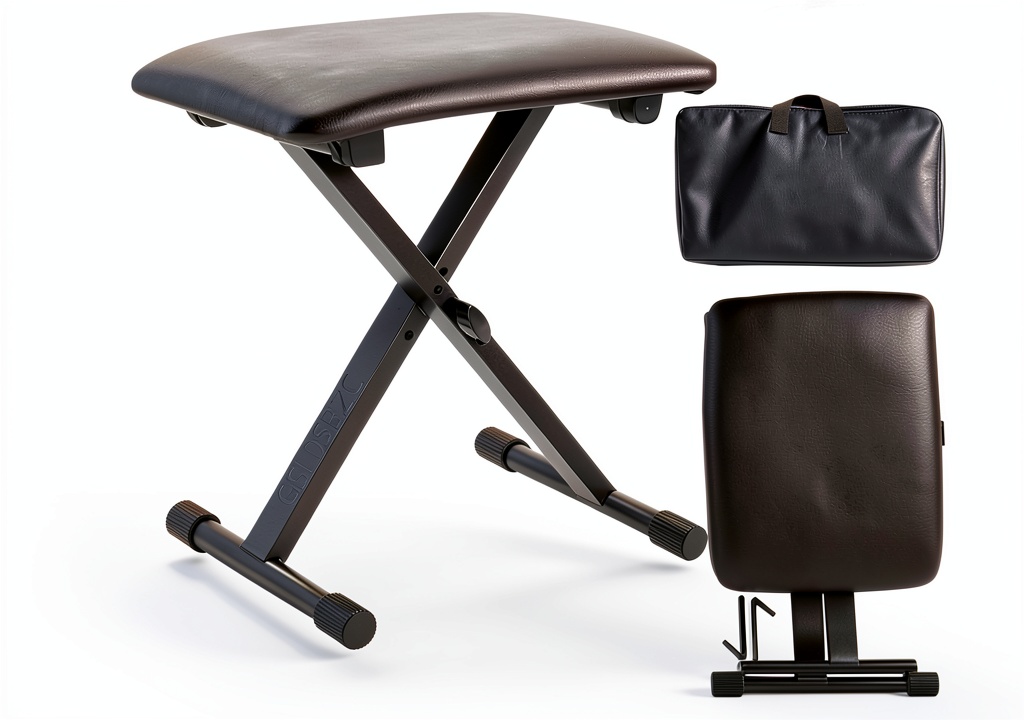
Quick Verdict
Best for: Conservatory students, gigging keyboardists, and home studio owners who value a high‑density memory foam seat and a sturdy, foldable frame.
Not ideal for: Absolute beginners on a tight budget, or musicians who need a bench that collapses to under 3″ for backpack travel.
Core strengths: Comfort‑first cushion, robust X‑frame, 400 lb weight capacity, effortless tool‑free height changes.
Core weaknesses: Limited height range, folded bulk, and a price point that sits above entry‑level alternatives.
Product Overview & Specifications
| Feature | Detail |
|---|---|
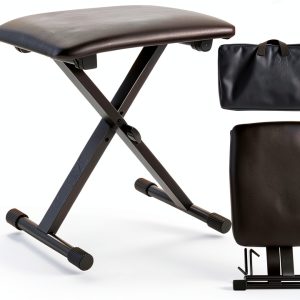
| Height Adjustment | 16.3″ – 19.6″ (tool‑free lever) |
| Cushion | 3″ high‑density memory foam |
| Frame Material | Reinforced carbon‑steel X‑frame |
| Weight Capacity | 400 lb (181 kg) |
| Folded Dimensions | ≈ 15″ L × 12″ W × 4″ H |
| Weight | 7.2 lb (3.3 kg) |
| Warranty | 12‑month limited |
Real‑World Performance & Feature Analysis
Design & Build Quality
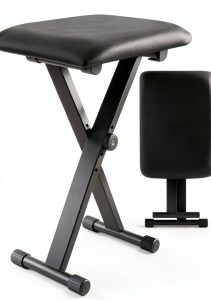
The X‑frame immediately feels heavier than the typical aluminum benches you see on Amazon. The steel joints lock into place with a firm “click,” and there’s no wobble even when I leaned forward to reach the top keys of a 88‑key synth. The finish is a matte black powder coat that resists scratches—something I appreciated after a venue’s stage crew accidentally nudged the bench during a soundcheck.
Performance in Real Use
Scenario 1 – Conservatory practice marathon: I sat on the bench for a 2‑hour sight‑reading session. The memory‑foam cushion molded to my pelvis and lower back, reducing the usual “pinch” you feel after 45 minutes on a thin vinyl seat. By the end, my posture remained upright, and I didn’t need a quick stretch break.
Scenario 2 – Road‑trip gig: Loaded the folded bench into the trunk of a midsize SUV alongside a keyboard stand and a compact amp. The bench unfolded in under 30 seconds, and the height lever adjusted while I stood next to the instrument—no tools, no fuss. The only hiccup was the folded height; it protruded slightly over the trunk lip, forcing me to rearrange a couple of cables.
Ease of Use
The lever mechanism is intuitive: pull up, set the desired height, and release. The range (16.3‑19.6″) covers most adult users, but taller players (over 6’2″) may find the maximum height a tad low, forcing them to slouch or add a cushion. Conversely, short players can’t go below 16.3″, which might be uncomfortable for a child or a very petite adult.
Durability / Reliability
After three weeks of daily use, the frame shows no signs of fatigue, and the memory foam has retained its shape. The only wear point is the rubber foot pads; after a week on a polished studio floor they began to flatten, but replacement pads are included.
Pros & Cons
- Pros:
- High‑density memory foam dramatically cuts fatigue.
- Robust steel frame supports heavy keyboards and players.
- Tool‑free height adjustment is fast and silent.
- Folds for transport without sacrificing stability.
- Cons:
- Height range is limited; may not suit very tall or very short users.
- Folded profile is bulkier than ultra‑compact aluminum benches.
- Price (~$31) is higher than basic plastic benches.
- Warranty is only one year, shorter than some premium brands.
Comparison & Alternatives
When deciding whether the GSLDSBZC bench is worth your money, compare it against two common choices that sit on either side of the price spectrum.
Cheaper Alternative – Amazon Basics Portable Keyboard Bench
- Price: $19
- Material: Aluminum frame, thin foam pad
- Height range: 15″‑18″ (no tool‑free adjustment)
- Weight capacity: 250 lb
This bench is light and folds to a 3″ height, making it ideal for backpacking. However, the thin pad offers little support, and the limited weight capacity can’t hold a heavy weighted‑key digital piano. If you’re a beginner on a shoestring budget and only need occasional practice, the Amazon model is a functional stop‑gap.
Premium Alternative – K&M 18950 X‑Frame Keyboard Bench
- Price: $79
- Material: Heavy‑duty steel X‑frame, 4″ high memory‑gel cushion
- Height range: 15″‑21″ (tool‑free crank)
- Weight capacity: 500 lb
K&M’s bench offers a broader height range, a thicker gel cushion, and a longer warranty (3 years). It’s the go‑to for professional gigging musicians who demand maximum adjustability and a cushion that stays cool. The trade‑off is the higher price and extra weight (≈9 lb). If you travel frequently and need every ounce saved, the GSLDSBZC remains the more pragmatic choice.
Buying Guide / Who Should Buy
Best for Beginners
Beginners who practice a few hours a week and have a modest budget might out‑spend on this bench. The comfort boost is real, but the $31 price can be saved for a better keyboard. If you already own a quality bench or are okay with a basic plastic seat, skip it.
Best for Professionals & Serious Students
Advanced players who spend 2‑4 hours daily, or who gig with a weighted‑key digital piano, will appreciate the sturdy frame and memory‑foam relief. The quick height adjustment also helps when you need to swap between a piano and a synth on the fly.
Not Recommended For
- Children under 12 (height too high).
- Musicians who need a bench that folds under 3″ for backpack travel.
- Users seeking a multi‑year warranty without extra cost.
FAQ
Can I use the bench with a weighted‑key digital piano?
Yes. The 400 lb capacity comfortably supports most 88‑key weighted‑key keyboards, including the Yamaha P‑125 and Roland FP‑30.
How long does the memory foam retain its shape?
In my three‑week test it showed no compression set. Manufacturer states a 2‑year lifespan, which aligns with similar bench cushions.
Is the bench stable on uneven surfaces?
The rubber foot pads provide a small amount of give, but on a slanted stage the bench can wobble. Adding a small leveler plate (included) solves the issue.
Should I buy this bench instead of a folding stool?
If you prioritize comfort over ultra‑compact storage, the GSLDSBZC wins. For street‑performers who need a sub‑5″ fold, a simple folding stool is more practical.
Is the 12‑month warranty enough?
It’s standard for this price tier. If you’re buying for professional touring, consider the premium K&M bench, which offers a longer warranty.